

Thank you for signing up with Wealthy!
Our team will be in touch with you soon.
Watch what our Wealth Partners have to say about us
(Just a 1 minute video)
Download
Free Content

And we’ve got more for you as you wait ..


Download
Wealthy Partner App
Deliver exceptional investing
experience to your clients.


When Buffett bought gold for the price of silver
A few days ago, the IMF warned that the recession triggered by the outbreak of Coronavirus “could be worse than 2009”. Like every round of market crash, the current correction and loss of investor wealth has also brought back memories of the 2008 financial crisis. Expectedly, there are memes and jokes around a famous statement: be greedy when others are fearful.
Considering all this, it is a good time to revisit an episode where the man behind the statement saw an opportunity when everyone else saw fear.
***
On Thursday, September 11, 2008 -- exactly 7 years after the WTC towers collapsed -- the American financial system was headed in the same direction. Lehman Brothers, shockingly leveraged at 30 dollars of debt for every single dollar of equity, had lost 42% of its share price during the day even as its CEO was scrambling to find buyers.
As the real estate bubble began to deflate, the dire situation was best summed up by Paul Giamatti in the movie Too Big To Fail -- we don't do this now, we won't have an economy on Monday.
With nobody to take over its "toxic assets", Lehman Brothers filed for bankruptcy after midnight on Sunday, thus becoming the largest bankruptcy in the US. By Monday morning, the impact was felt on mutual funds and even working capital of firms like GE even as the Dow kept tumbling.
A few streets away, the heads of America's largest financial institutions including Merrill Lynch and AIG were looking to sell stake to stay afloat. If left unchecked, the ripple effect would have led to ATMs running dry, people hiding "cash under their mattresses", and a collapse of the American banking system with effects all around the globe.
Just a few days after it refused to bail out Lehman Brothers, the Federal Reserve stepped in with $85 billion to rescue AIG, once the world's largest insurance company. To many, it seemed like the world's capitalist paradise was turning socialist.
Enter Warren Buffett
Of course, nobody knew all this better than Warren Buffett, CEO of Berkshire Hathaway, who would later describe the system as "dominoes placed to each other." He had already turned down the offer of buying Lehman Brothers and AIG and cautiously avoided pumping money into financial institutions while many others did.

However, when he was approached by Goldman Sachs, Berkshire Hathaway agreed to invest $5 billion, a decision described by a prominent publication as "an offer Goldman couldn't refuse". Given how the shares of the bank had been falling for a year and Berkshire's own shareholders didn't seem to support the move, it was a surprising decision.. For many, it seemed like a departure from Buffett’s own investing values.
But the Oracle of Omaha, who had studied the assets of Lehman Brothers, saw value in his investment at a time when the market made everything look risky.
In the middle of a bear market, during the collapse of the asset bubble, and months before a new President took office, Buffett went against popular opinion and invested in an "ailing" investment bank. He saw an opportunity in a panic-stricken market.
Of course, it also helped that he extracted a pretty good deal: preferred shares worth $ 5 billion and warrants for 43.5 million additional shares. Buffett knew only too well that his decision was not only a financial lifesaver but also a seal of approval for other investors. Basically, it was Buffett practising what he preached - be greedy when others are fearful.
So how much did he make?
His decision was vindicated in the first 2.5 years in March 2011 when Goldman decided to buy back its shares and pay back the money. By then, even without counting his warrants, he had already made 35% ($1.75 billion) in dividends and payment from the bank. As for warrants, although Goldman renegotiated the offer before Berkshire could exercise the warrants, Berkshire was still granted 13.1 million shares and $2 billion in cash. All in all, it was a great investment, even by Buffett standards.
In doing so, he also gave yet another example of one of his investing virtues: buying wonderful companies at a fair price.


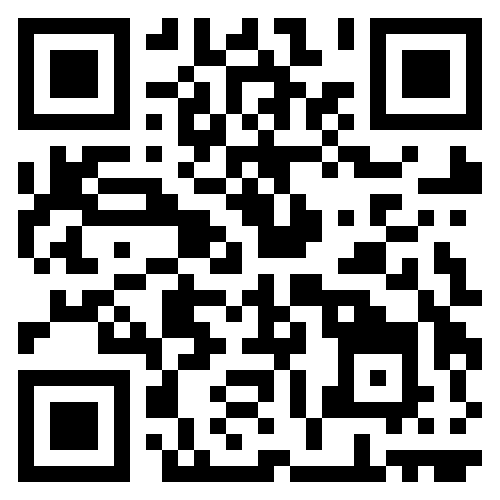
Download the Wealthy Appto enjoy efficient Trading and Investing!


Welcome to Wealthy


.png)
Download Wealthy Partner App
.png) Apple Store
Apple Store Play Store

