

Thank you for signing up with Wealthy!
Our team will be in touch with you soon.
Watch what our Wealth Partners have to say about us
(Just a 1 minute video)
Download
Free Content

And we’ve got more for you as you wait ..


Download
Wealthy Partner App
Deliver exceptional investing
experience to your clients.


Is Investing in a Startup Worth It?
In 2004, Peter Thiel put $500,000 in Facebook as an angel investor. When he cashed in his shares in 2012, he got over $1 Billion.
In 2000, Masayoshi Son put $20 Million in Alibaba. He is estimated to get over $80 Billion when he cashes in his 34% stock.
These stories are the stuff of legends now. Angels betting on Unicorns is the flavor of the season in the whole equities investment market.
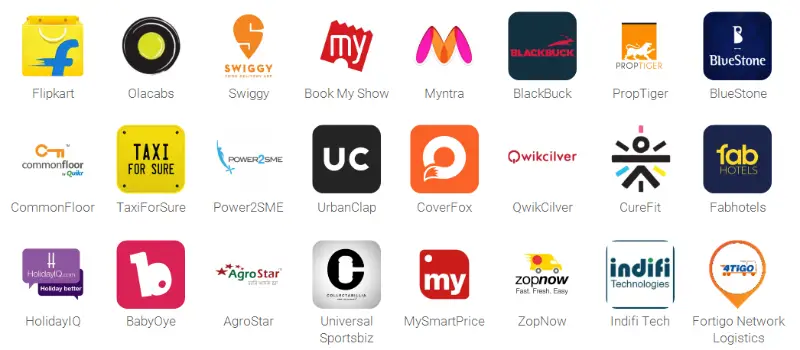
Even in India, we have several success stories of upstarts becoming highly valued startups, making their angel investors wealthy. MakeMyTrip, Ola Cabs, Flipkart, and Druva Software are probably the best examples of this.
These success stories have led to many people seriously considering investing in startups as the best way to multiply their money. Maybe you are thinking about it too. If that is indeed the case, it brings us, quite literally, to the billion-dollar question:
Is Angel Investing the right choice for you?
To answer this, let’s take a closer look at what angel investors are faced with.
The angel investor typically invests a small sum at a very early stage of the company and waits for the company to grow big. Every successful investment multiplies the money 30–100 times while every bad one returns a big fat zero. This means the angel has to invest in multiple companies, in the hope that at least one or two will reap the huge returns.
To top that, unlike publicly listed companies, startup stock is not liquid. You can’t sell it whenever you want. It often takes 4–7 years to cash out from a successful startup investment. One needs to have a lot of money and a lot of patience to play this game.
Take Y Combinator, for example. They invested in 940 companies over the last 10 years and today they are one of the most successful investors. They had the cash to bet on nearly a thousand startups and patience to wait for companies like Airbnb, Dropbox, Zenefits, Stripe and InstaCart to make it worth their while.
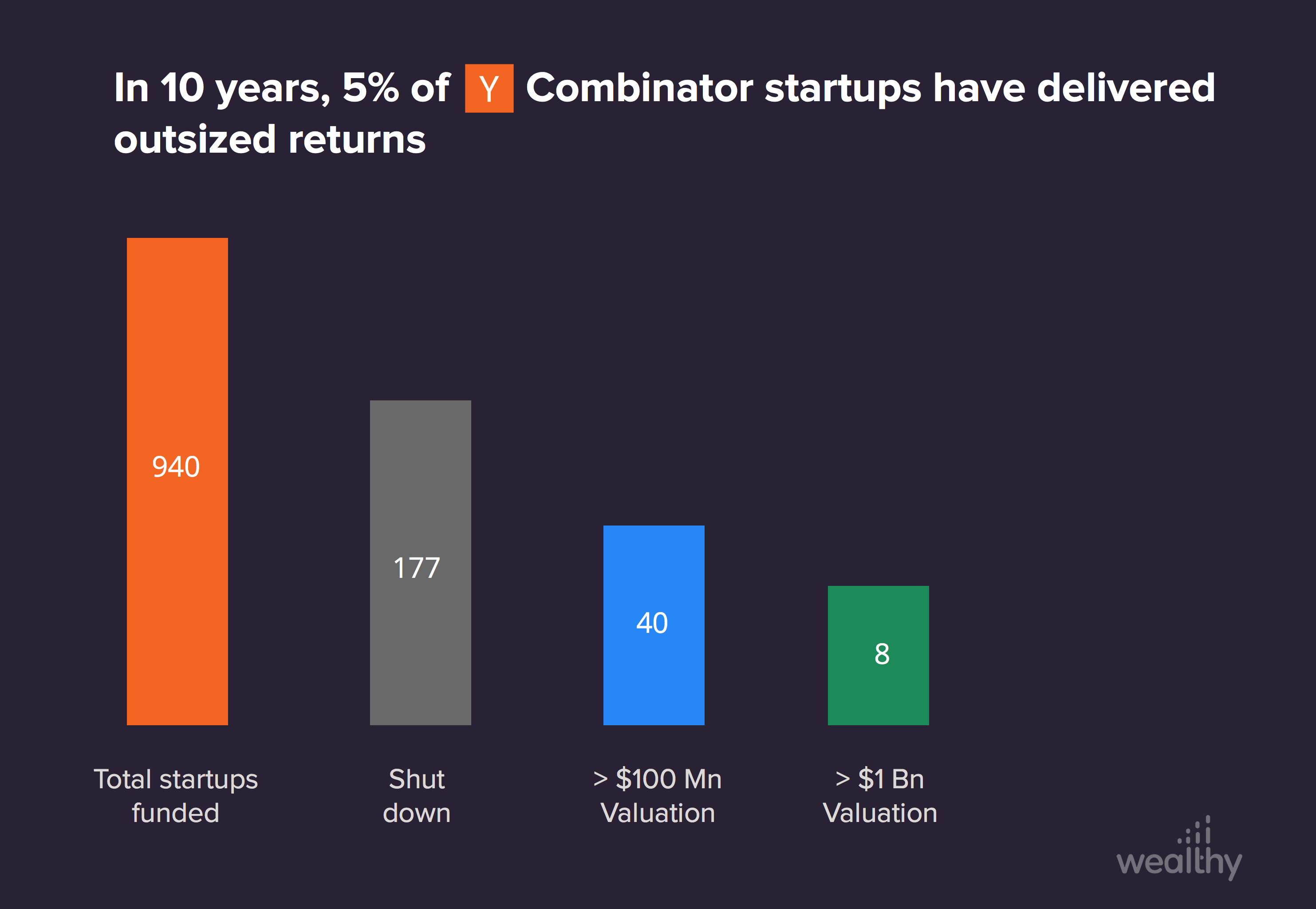
Y Combinator’s enviable early-stage success (yes, 5% hit rate is enviable) is down to its people. Before starting as investors, the founders were entrepreneurs themselves.
They have the experience, network, know-how, and intellect to answer questions like these:
- Is this product/service providing a solution for a large need?
- Does this team have the capability to execute?
- What are the barriers to scale?
- Can technology disrupt existing business models or create new markets?
Compare this to an individual investor, which is probably what you are going to be. More often than not, an individual investor has to depend on one variable alone: the quality of the team. Maybe they went to school together or have heard great things about the founders of their friends.
Assessing a startup investment is both an art and science and it’s something that one becomes better at only with experience.
Let’s run the numbers for you.
To be an investor of any worth, you’ll have to put in at least 5 lakh rupees in any company. Assuming that you can match Y Combinator’s success rate of 5%, you will need at least 20 companies to get that one unicorn. This means you’ll have to put in at least 1 crore.
If you are willing to commit that kind of money over the next few years, then startup investing might be a good strategy for you. And even if you have that kind of money, it is better to make those first few investments along-with experienced startup investors.

In any case, until you reach a life-stage where you can build a portfolio of startups, you are better off investing in other equity asset classes, as a top-rated mutual fund.


Download the Wealthy Appto enjoy efficient Trading and Investing!



Welcome to Wealthy


.png)
Download Wealthy Partner App
.png) Apple Store
Apple Store Play Store

