An Investors Guide to Stock Market Crash
Stock market crashes can be scary. After all, who would want to see their portfolio come down by 20%, 40% or even 50% in a matter of months?
But crashes are inevitable. Sooner or later, the markets do crash.
The last major crash was in 2008-09. In just a year, markets were down by more than 50%. And some stocks had lost more than 95%. But don’t worry. We don’t want to scare you.
Stock market crashes should be welcomed. Sounds strange? Or even stupid?
It is not.
Stock market crashes can give your portfolio a big boost if you are smart about it.
Let’s try and prove that by taking examples of some of the biggest crashes in recent times.
Recession of 2008-09
All of us remember the recession of 2008-09. The credit crisis that started in the US (due to the housing bubble burst) caused Indian markets to fall dramatically too.
In just a little more than a year, the Sensex was down from almost 21,000 to 8,100 - a fall of more than 60%!
This is how it looked.
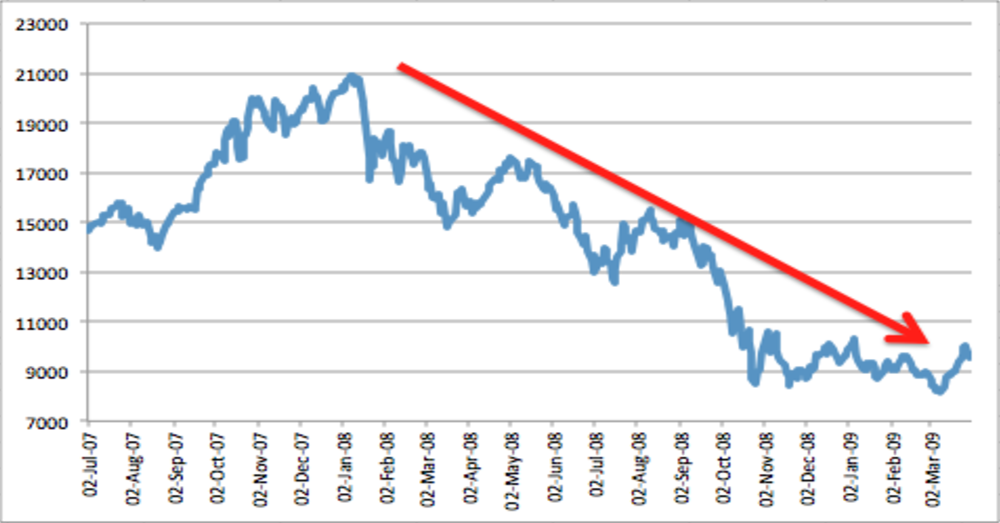
So if you had a portfolio of say Rs 10 lac at the start of 2008, it would have been reduced to just Rs 3.9 lac if it behaved like Sensex. This was unprecedented.
But what happened after the crash? This.
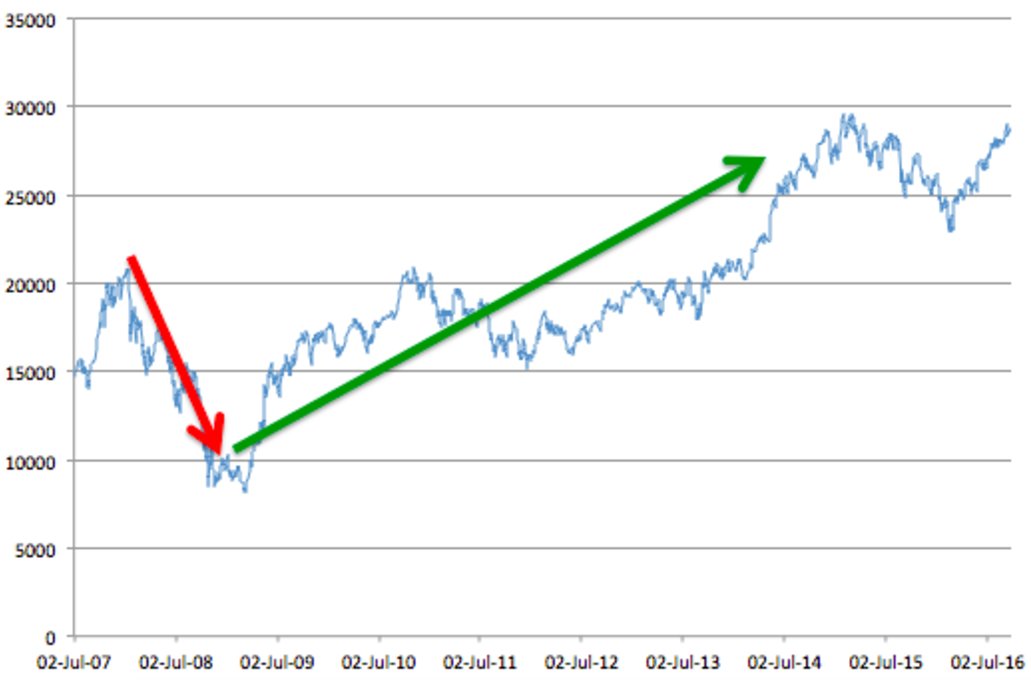
After the fall to 8100, Sensex rose to cross 29,000. And all this happened between 2009 and end-2014. That’s a rise of more than 250% in 5 years.
What exactly does this mean?
Let's compare it with an FD (with post-tax returns of 6.4% - assuming 20% tax on 8% - yielding FD).
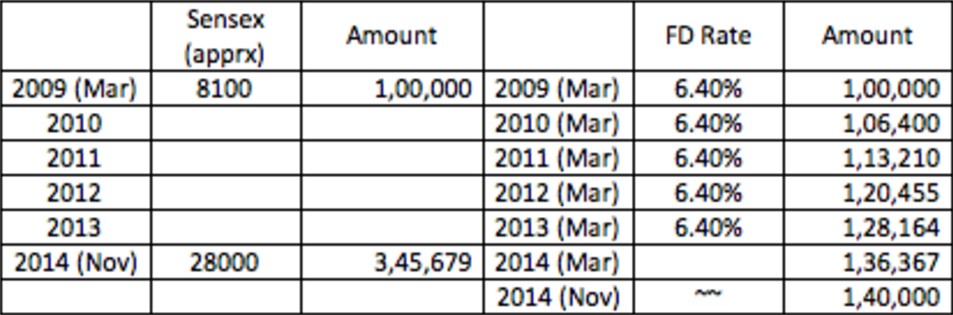
An investment of Rs 1 lac made in both Sensex and FD at the same time (early 2009), gives dramatically opposite results.
Amount invested in Sensex turned into Rs 3.45 lacs whereas that in FD became just Rs 1.4 lac.
And this is what we are trying to highlight:
When the stock markets crash, it is the best time to invest more. The markets will revive sooner or later. And so will your portfolio.
Let’s see another crash that originally forced investors to shun the markets. But which too made money for those who decided to remain invested (and bought more) during the crash.
Dot-Com Bubble of 2000-01
The dot-com crisis of 2000-01 was soon followed by the 9/11 terrorist attacks. Both these events led markets across the world to the tank. Indian markets too fell a lot (see graph below).
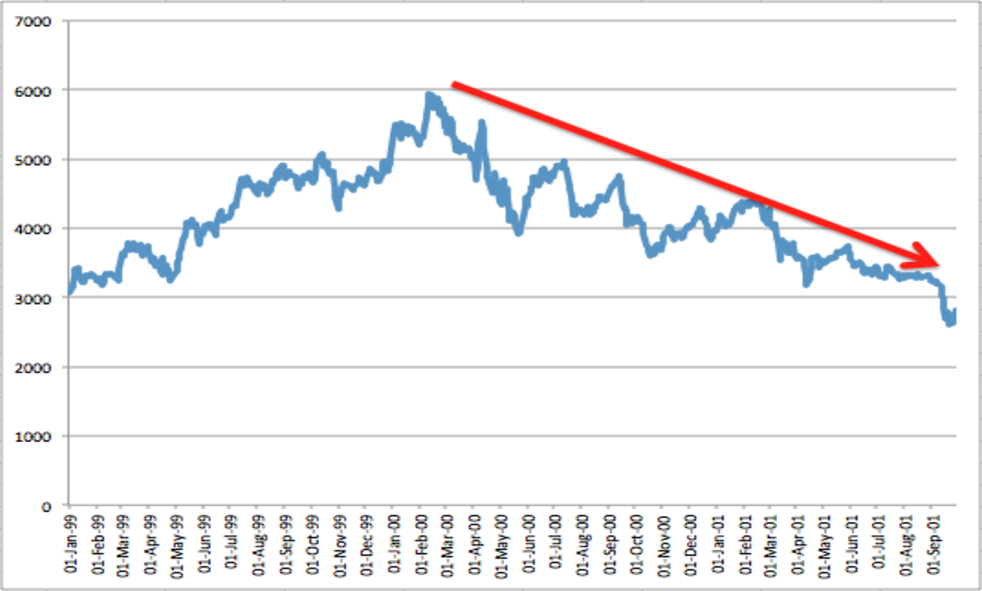
What happened after that big crash?
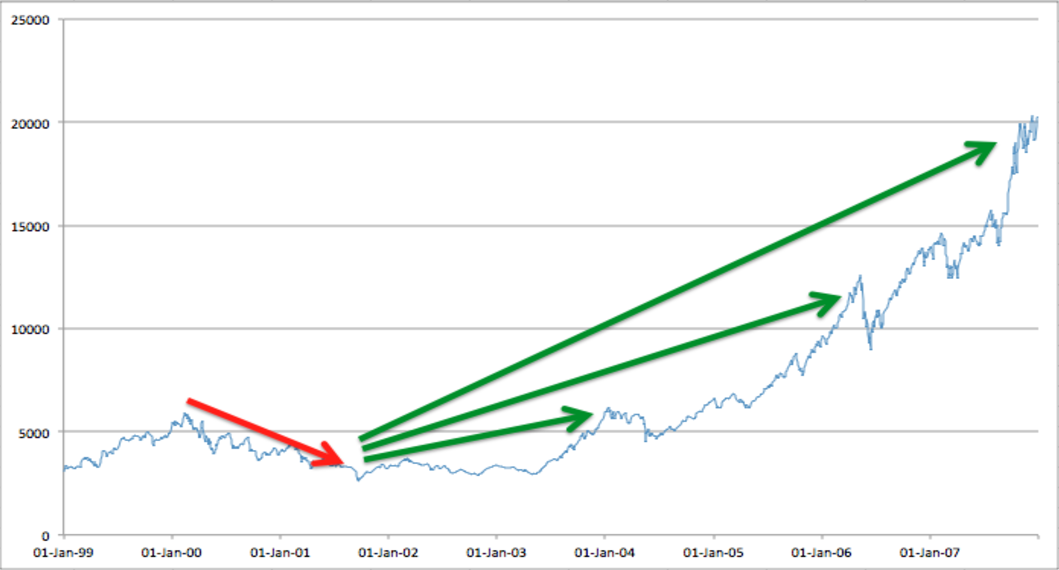
The markets kept rising like anything.
If someone had invested when Sensex had crashed to 3,000 levels in September 2001 (remember 9/11), money would have
- Doubled by 2004,
- Tripled by 2006, and
- Become 6 times by 2007 (i.e. in 6 years)
Let’s not even compare it with FDs this time. And you know why? ;-)And this happens after every big crash. After the crash, markets might remain low for some time. But eventually, the recovery happens and those who stay invested (or invest more during the crisis), make tonnes of money.
What about Recent Big Falls?
During August 2015-February 2016, Sensex came down from its ~28,000 levels to about 23,000, a fall of 18% in six months. Since then the market has regained its losses and as of November 2016 is again close to 28,000 levels.
Many smart investors bought more during this crash. And when markets recovered, they were sitting on nice juicy profits.
How to Act Smart in Market Crashes?
No one can predict when the next crash will happen. But it will happen for sure.
And when it does happen, it is the best time to invest more (either in stocks or through Mutual Funds). The best course of action during a stock market crash is to:
- Continue regular SIPs no matter what
- Invest any surplus money that is not required for a few years, in equity mutual funds or stocks
If you know how to pick direct stocks, do so. But understand the risks involved. If you don’t know how to do it, there is no shame in admitting it. Stick to mutual funds where expert fund managers know what they are doing and know how to pick a diversified portfolio of stocks.
A stock market crash is an opportunity to invest more and profit from the future recovery of the market.
Now that you are smarter, don’t look to survive the next crash. Instead, take advantage of it and become Wealthy.


Download the Wealthy Appto enjoy efficient Trading and Investing!


Welcome to Wealthy


.png)
Download Wealthy Partner App
.png) Apple Store
Apple Store Play Store


